
“AAA amethyst” is a seller’s quality description, not a universal gemstone grade. GIA states that no standard quality-grading scale exists for amethyst, even though companies may use labels such as AAA, AA and A. Ask what the label means within that seller’s own system.
A useful comparison looks beyond the letters to the stone’s appearance, dimensions, disclosure and the construction of the finished jewelry.
Ask the seller to define the label
Does “AAA” describe color, clarity, cutting, or a combination? Does it apply to every stone in a product variation, or a photographed example? Without those details, the label cannot support a like-for-like comparison between shops.
For the underlying grading distinction, read GIA’s amethyst buyer’s guide. A retailer’s internal scale should not be presented as a GIA grade.
Compare color under similar conditions
Look for several views or a short video with the lighting described. A darker stone is not automatically the better choice for every design or preference. Consider whether you enjoy the color in ordinary light and whether the center remains visually lively.
Read clarity descriptions carefully
Ask whether visible inclusions are present and how the seller assessed them. “Eye-clean” concerns what can be seen under particular viewing conditions; it does not mean a stone has no microscopic features.
Use the actual item’s images when available. If a representative sample is pictured, natural differences may occur, and the seller should explain how much variation to expect.
Do not skip dimensions and setting details
Two rings can use similarly described amethyst and still differ substantially in center-stone width, height, accent stones and metal construction. Compare millimeter measurements, the complete setting and whether the ring is fixed-size or adjustable.
If you are comparing value, include those features in the comparison rather than attributing the entire price difference to a letter grade.
A better buying checklist
- Gemstone identity and any disclosed treatment information.
- Color views in understandable lighting.
- Visible clarity features and the seller’s definition of its terms.
- Stone and finished-piece dimensions.
- Metal, finish, fit and return conditions.
Does an identification report replace a quality comparison?
Read what the report actually covers. Identification, origin claims, treatment observations and a retailer’s quality scale are different matters. A document should support only the statements within its scope.
Compare amethyst options through design and measurements
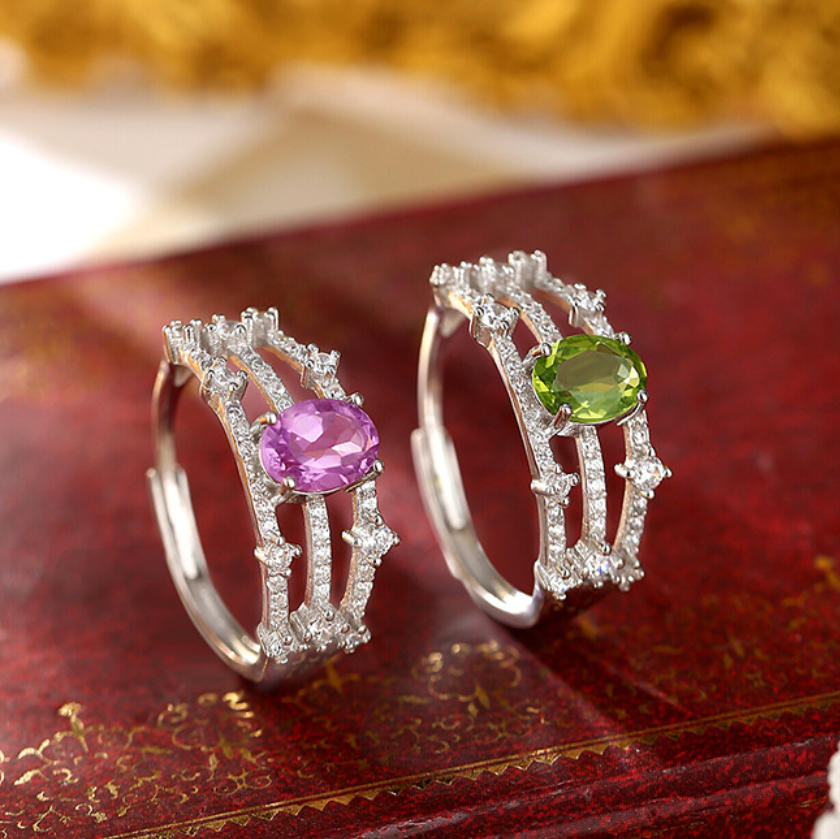
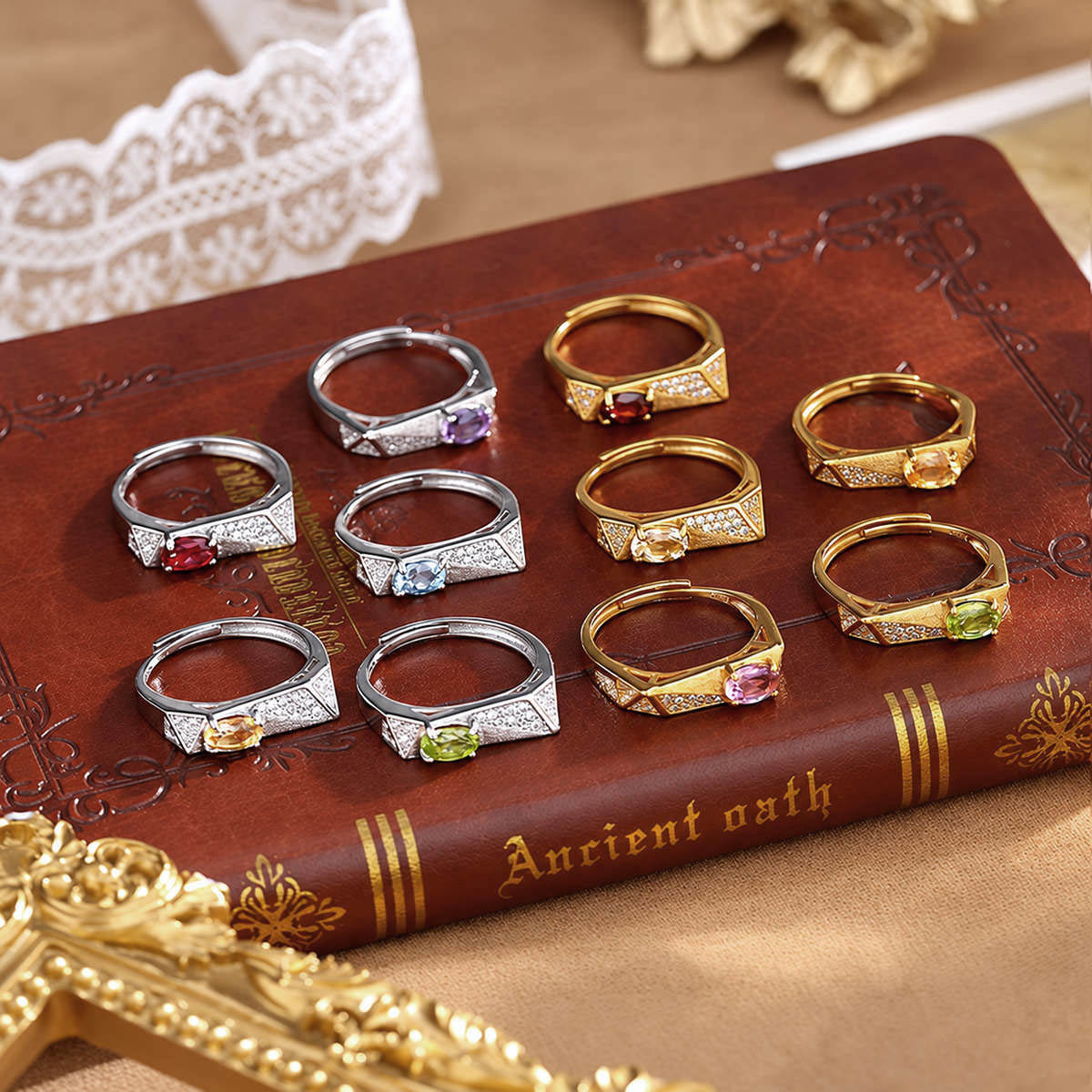
Both listings offer Amethyst, but the gallery photographs show several gemstone and finish options. The grouped images illustrate variations; they do not mean that every shown ring is included, or establish an AAA grade.
Oval crown split-shank ring
The listing specifies a 5 × 7 mm center and a decorative crown with a split band. Select Amethyst and compare its color information with the other available stones. The word “crown” describes the design, not a gemstone quality grade.
Vintage brushed solitaire ring
This listing gives a 4 × 6 mm center and offers gold-tone or silver-tone finishes. Compared with the crown ring, it provides a different frame and center size. Ask how the selected Amethyst option is described; no lettering system can replace that information.
For selecting a silhouette after comparing the stone information, see our gemstone ring shape guide.