
“Emerald-cut” describes a cutting style; “emerald” names a gemstone. A ring can have an emerald-cut amethyst, citrine or moissanite without containing emerald. Read the gemstone identity separately from the shape and cut description.
This distinction is especially useful when shopping for rectangular colored-stone rings, where a headline may combine the cut, motif and metal before naming the available gemstones.
Break the product title into separate parts
Consider the phrase “emerald-cut natural gemstone bow ring.” It describes a cut, an origin claim, a broad gemstone category and a decorative motif. It does not identify which gemstone option you selected.
Open the variation choices and material description. Confirm that the selected color is associated with an actual gemstone name rather than treating every green rectangular stone as emerald.
A rectangular gemstone can belong to several varieties
GIA’s topaz buyer’s guide lists emerald cuts among the many cutting styles used for topaz. Shape names are not exclusive to the gemstone they happen to mention.
Shape and facet arrangement are not identical
A stone can have a rectangular outline while using a different facet pattern. An outline is what you see around the edge; a cutting style also concerns how the facets are arranged.
Ask for close-up and side views when that detail matters. A brief title may simplify the terminology, so compare the actual product rather than relying on a shape label to predict every aspect of its appearance.
Care follows the material, not the cut name
A cleaning instruction for emerald should not automatically be applied to an emerald-cut stone of another material. Likewise, advice for amethyst is not a complete care guide for every rectangular gemstone.
Identify the center, accent stones, metal and finish before choosing a cleaning method. The finished setting and any disclosed treatments matter alongside the gemstone name.
Questions that make a listing clearer
- What is the exact center gemstone in the selected option?
- What are its length and width in millimeters?
- What does the cut description refer to?
- What are the accent-stone materials?
- Which care instructions apply to the complete piece?
Make a comparison that answers your real preference
If you want a rectangular silhouette, compare dimensions and settings across several gemstone options. If you specifically want emerald, verify that identity first and then choose the outline you prefer.
Two rectangular designs where gemstone identity is separate
Read the selected gemstone on each listing. Neither a rectangular outline nor a step-cut description means the stone is emerald.
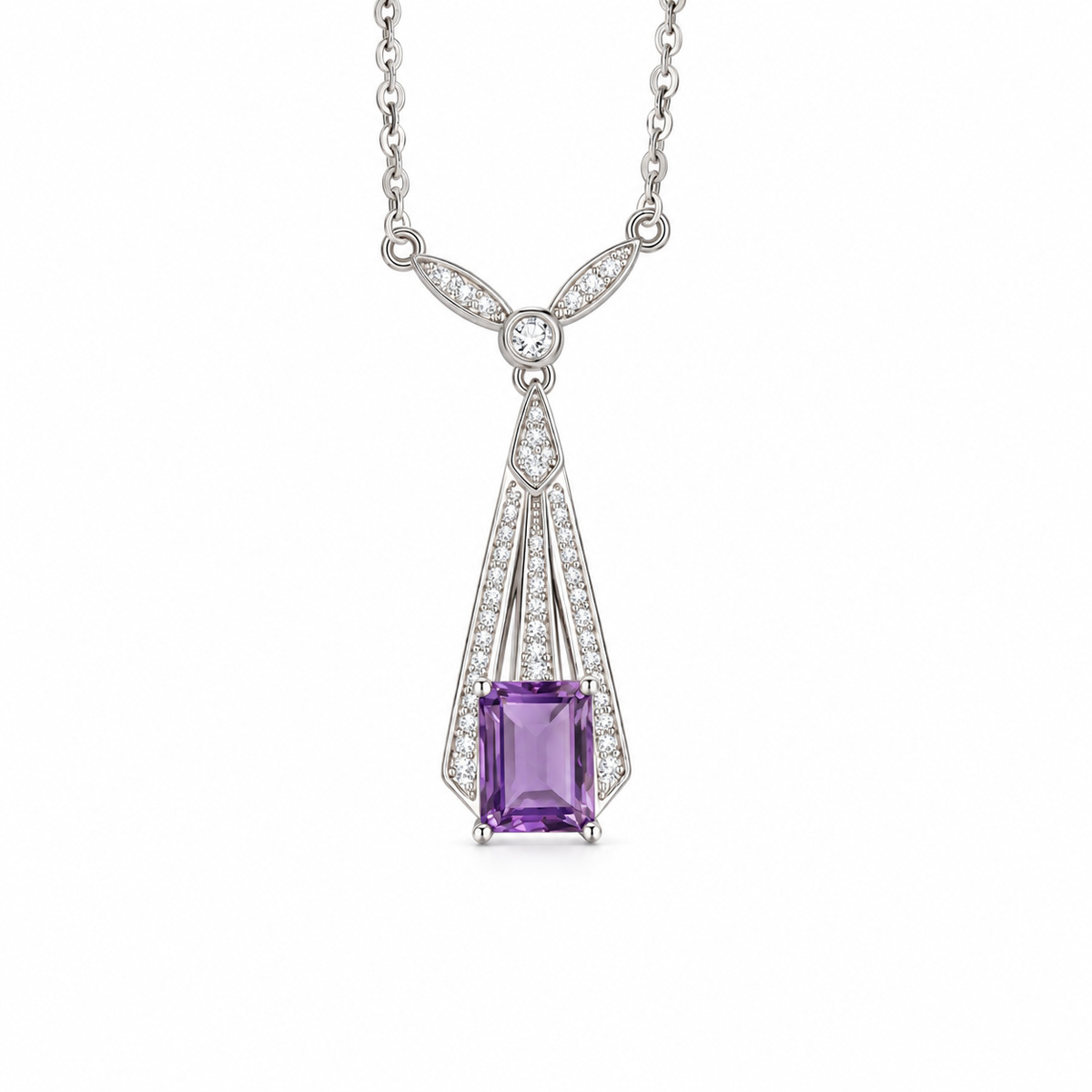
Art Deco rectangular pendant
The listing describes a rectangular step-cut natural gemstone, with a 6 × 8 mm center inside a 16 × 33.5 mm pendant. It offers Amethyst, Citrine, Blue Topaz, Garnet and Peridot. Select by gemstone as well as outline; the pictured purple center is one option.
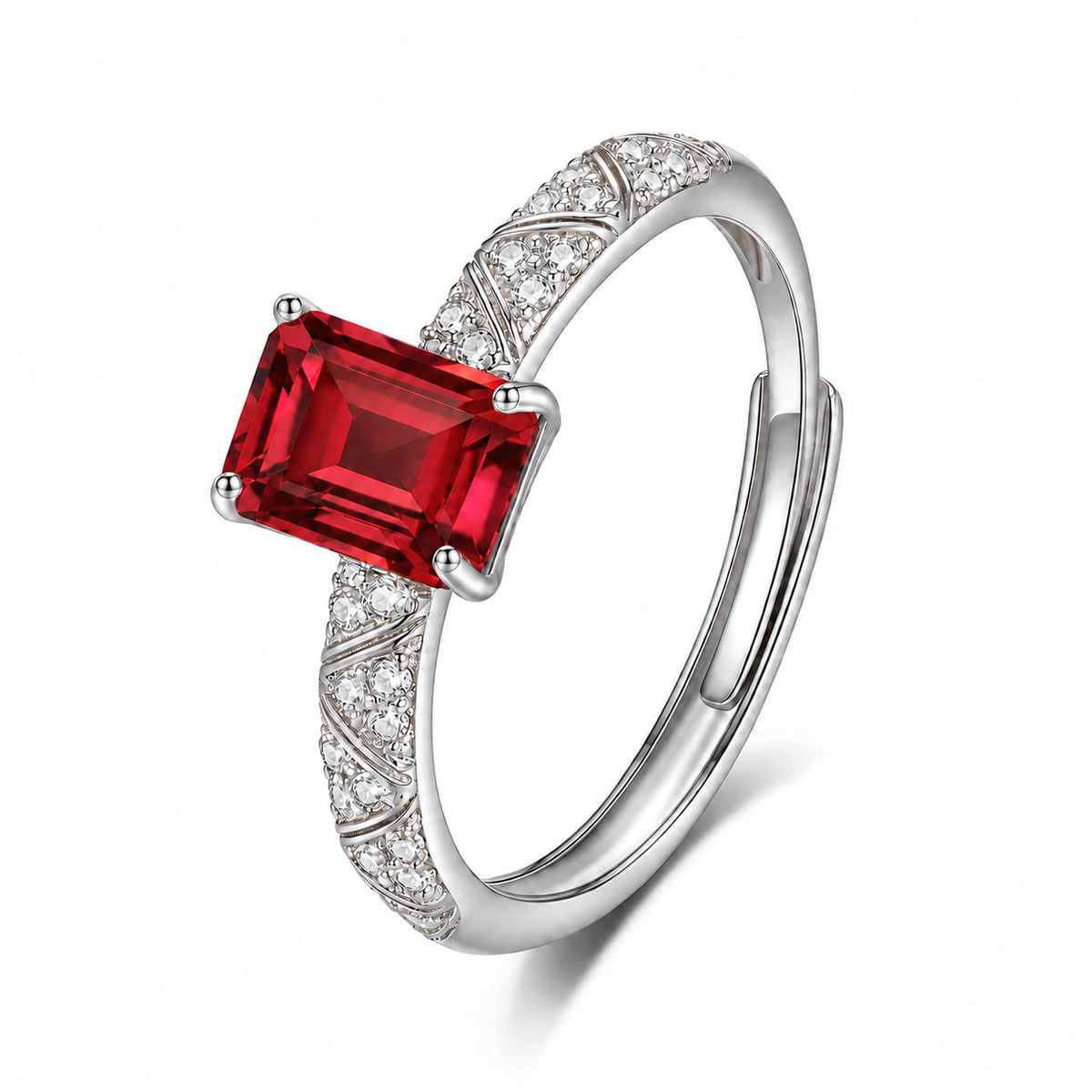
Rectangle-cut open-band ring
This listing names a rectangle-cut center of 5 × 7 mm and provides several natural gemstone options. Its title alone does not establish the exact facet arrangement. Ask for a close-up if emerald-cut facet details matter to your choice. The image shows a red option.
For a comparison focused on appearance and setting rather than gemstone identity, read our oval, pear and emerald-cut ring guide. That guide complements the terminology here instead of replacing item-specific information.