
Flat back moissanite earrings combine a low-profile backing with the bright light return of moissanite. They are popular with shoppers who dislike a traditional butterfly back pressing behind the ear, and they can create a neat look in a curated ear. Yet “flat back” describes only the backing style. Comfort also depends on post length, gauge, metal, setting height, and how securely the front attaches.
This guide explains those details, with special attention to moissanite flat back earrings with a 6-prong setting. Use it to compare options before browsing the VEZENY moissanite earring collection.
What Are Flat Back Moissanite Earrings?
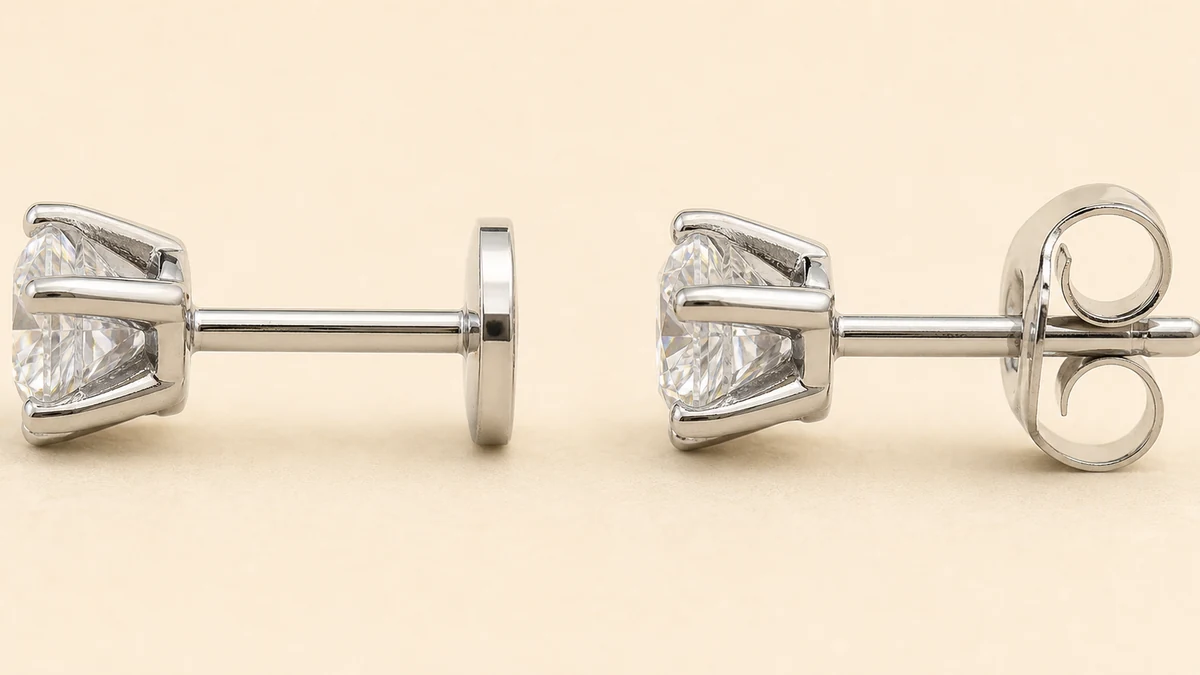
A flat back earring uses a small disk behind the ear instead of a butterfly-shaped clutch. The disk sits close to the skin, so it is less likely to snag on hair or poke outward. The decorative front may screw into the post or use a threadless pressure-fit mechanism. These systems are not interchangeable, so check the product description before buying replacement ends or posts.
Moissanite is a lab-created gemstone valued for durability and lively sparkle. It is a distinct jewel rather than a type of diamond. Its strong fire can make even a compact stud visually noticeable, which is useful when space is limited in a multi-piercing arrangement. Learn more in our overview of why shoppers choose moissanite.
Flat Back vs. Butterfly Back Earrings
Neither backing is automatically best for every wearer. Butterfly backs are familiar, easy to remove, and widely available. Flat backs provide a smoother rear profile and are often preferred for cartilage placements or earrings worn for longer stretches. A flat disk can still feel uncomfortable if the post is too short, while an overly long post can tilt and move.
- Choose a flat back when a low rear profile, reduced snagging, or a streamlined ear stack matters most.
- Choose a butterfly back when quick removal and conventional sizing are priorities.
- Check the fastening because threaded and threadless fronts require different handling.
Why Choose a Six-Prong Setting?
A six-prong head surrounds a round stone with six small points of metal. Compared with a four-prong setting, it can create a balanced, classic outline and adds more contact points around the stone. The tradeoff is slightly more visible metal. Good prongs should look even, sit smoothly, and hold the stone without covering an excessive amount of its face.
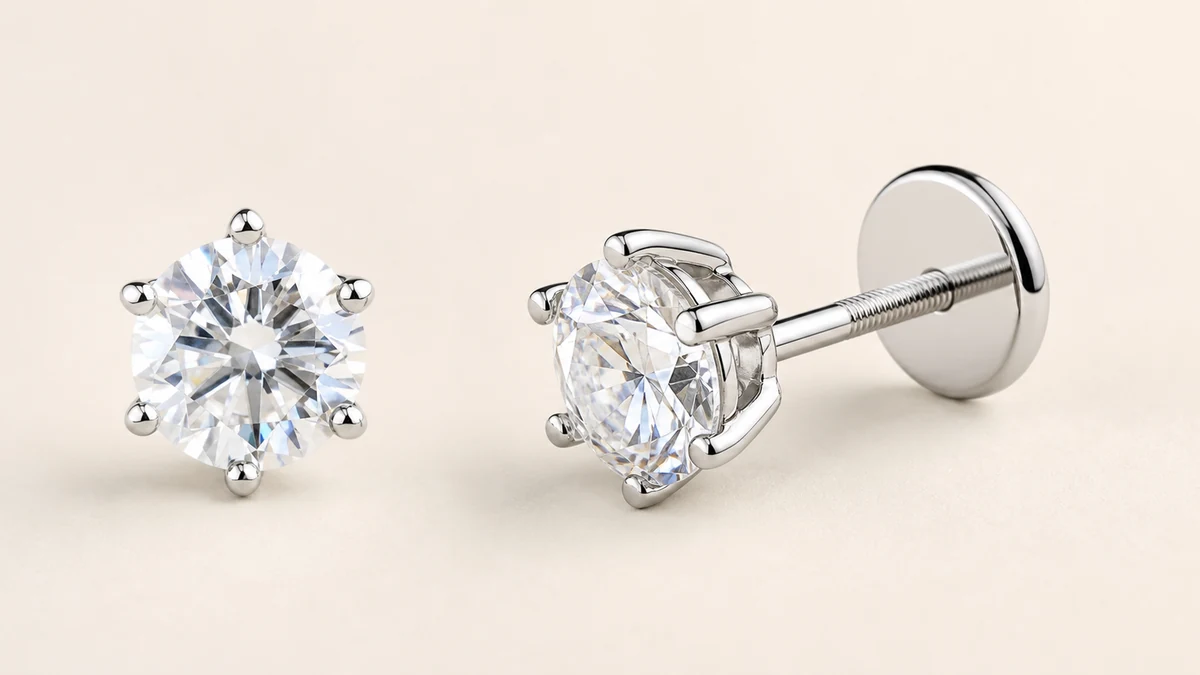
Prong count is only part of security. Construction quality, wear, and maintenance matter as well. If a stud begins to rattle, catches fabric more often than usual, or shows a lifted prong, stop wearing it until a jeweler checks the setting.
How to Choose Post Length and Gauge
Post length is the wearable space between the decorative front and flat disk. Anatomy and placement differ, so there is no universal perfect length. A healed lobe may need a different post than a cartilage placement, and swelling should never be ignored. A professional piercer can measure the area and confirm a suitable gauge and post length.
The fit should be secure without pinching. You should not force jewelry into a piercing or use a new piece to manage an irritated or unhealed site. If you are changing jewelry in cartilage or a newer piercing, ask a qualified piercer for guidance.
Metal, Setting Height, and Stone Size
Review the complete metal description—not just its color. Sterling silver, gold, and other alloys have different care needs, and individual sensitivities vary. If you know that your skin reacts to certain metals, confirm the alloy and any plating before purchase.
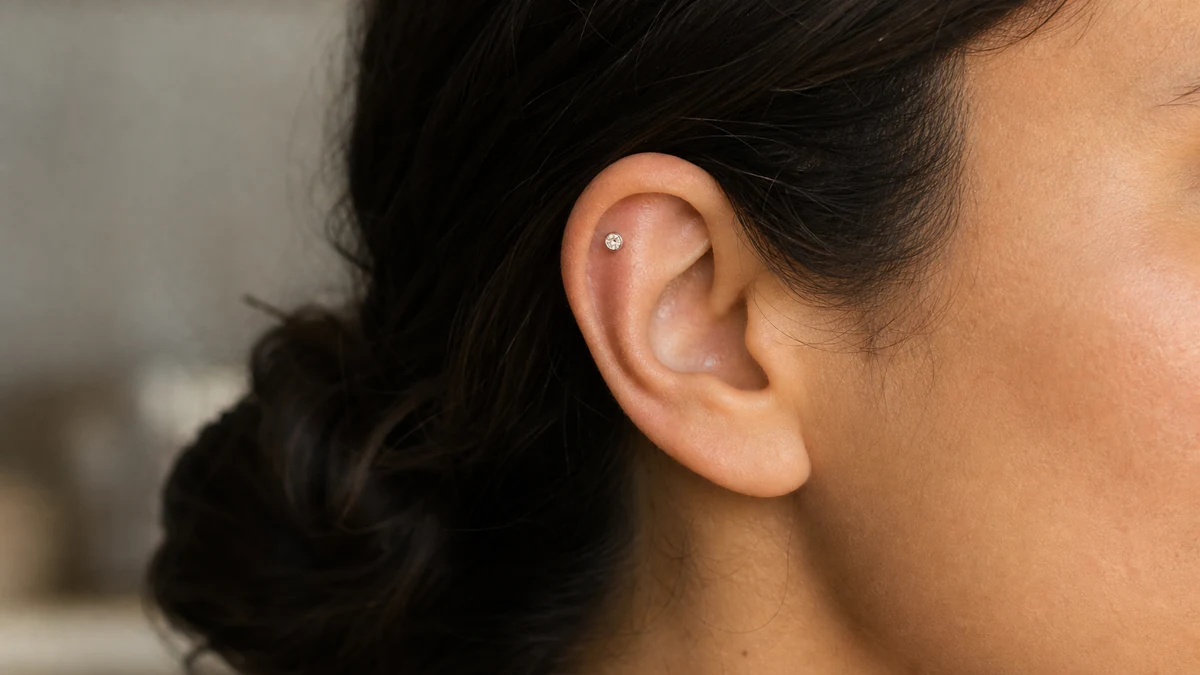
A low-set stone stays close to the ear, while a taller basket may allow more side light but can project farther. Stone size also changes the effect. Small moissanite studs work well as accents; larger stones become focal points. In a curated ear, leave enough visual and physical space between neighboring pieces.
Putting On and Caring for Flat Back Earrings
Work over a clean tray or towel so tiny components cannot roll away. With threaded jewelry, align the front carefully and turn it without forcing the threads. For a threadless system, follow the maker’s instructions because the tension comes from a gently bent pin. Check tightness periodically with clean, dry hands.
For routine cleaning, soak the jewelry briefly in warm water with a small amount of mild dish soap, brush gently with a very soft brush, rinse in a bowl, and dry with a lint-free cloth. Avoid cleaning over an open drain. See the full VEZENY jewelry care guide for general precautions.
Flat Back Buying Checklist
- Confirm whether the front is threaded or threadless.
- Verify post gauge and wearable length.
- Choose an appropriate stone diameter and setting height.
- Review the complete metal and plating description.
- Inspect prongs and fastening regularly.
- Seek a professional piercer’s help when fit is uncertain.
Frequently Asked Questions
Are flat back moissanite earrings comfortable for sleeping?
Their smooth rear profile may feel less intrusive than a projecting post, but comfort is personal. Pressure from side sleeping can still irritate an ear, and a poor post length can pinch.
Is a six-prong setting safer than four prongs?
Six prongs provide additional contact points, but security depends on design, workmanship, and condition. Either style can perform well when properly made and maintained.
Can I put a flat back earring in any piercing?
Only when the gauge, post length, fastening style, and placement are compatible. Never force jewelry into a piercing; consult a professional piercer if uncertain.
How often should I clean flat back earrings?
Clean them when oils or product residue dull the surface. Regular gentle cleaning is preferable to waiting for heavy buildup.
Find Your Preferred Flat Back Style
The best pair balances sparkle with practical fit. Compare the backing mechanism, post dimensions, setting profile, stone size, and metal before deciding. Explore moissanite earrings at VEZENY to find a design that suits your ear and everyday style.