
A moissanite pendant necklace is one of the easiest jewelry pieces to wear because it gives a single point of light near the face. But “pendant” covers many looks: solitaire, halo, pear, oval, bezel, symbolic shapes, and more. The right choice depends on shape, chain length, neckline, and how much attention you want the pendant to draw.
This is a style guide rather than a technical checklist. Use it to decide what kind of pendant fits your wardrobe before exploring VEZENY moissanite necklaces.
Pick a Pendant Shape That Matches Your Style
Round pendants feel classic and balanced. Oval and pear shapes create a slightly longer line, which can look elegant with V-necks or open collars. Halo pendants add more visible sparkle and can feel dressier. Bezel pendants look smooth, modern, and minimal.
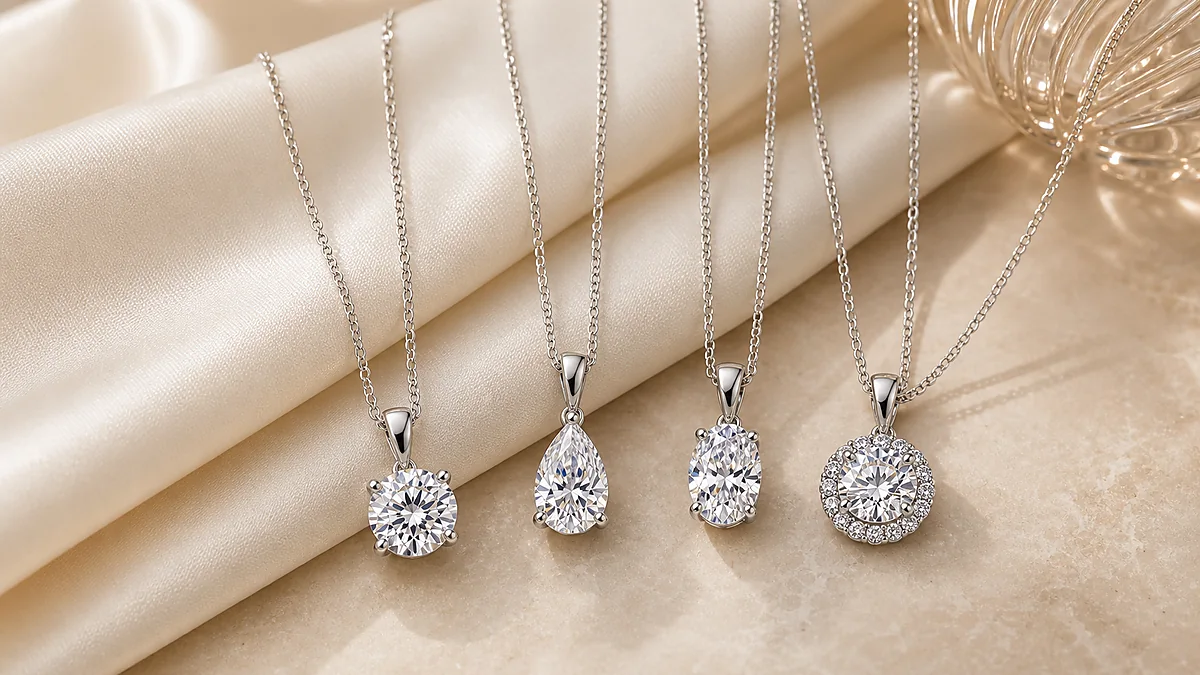
If you wear simple clothing, a more defined pendant can become the focal point. If your outfits already include patterns, collars, or layered accessories, a clean solitaire or bezel pendant may be easier to style.
Match the Pendant to Your Neckline
Neckline pairing is often overlooked. A pendant should sit where it can be seen clearly. A short chain works with scoop necks and open collars. A mid-length pendant works with everyday T-shirts, sweaters, and button-downs. Longer chains can look relaxed, but the pendant may disappear under outerwear.
When in doubt, adjustable length is valuable. It allows the same pendant to move from casual daytime outfits to evening wear without needing a second chain.
Layering Without Tangles
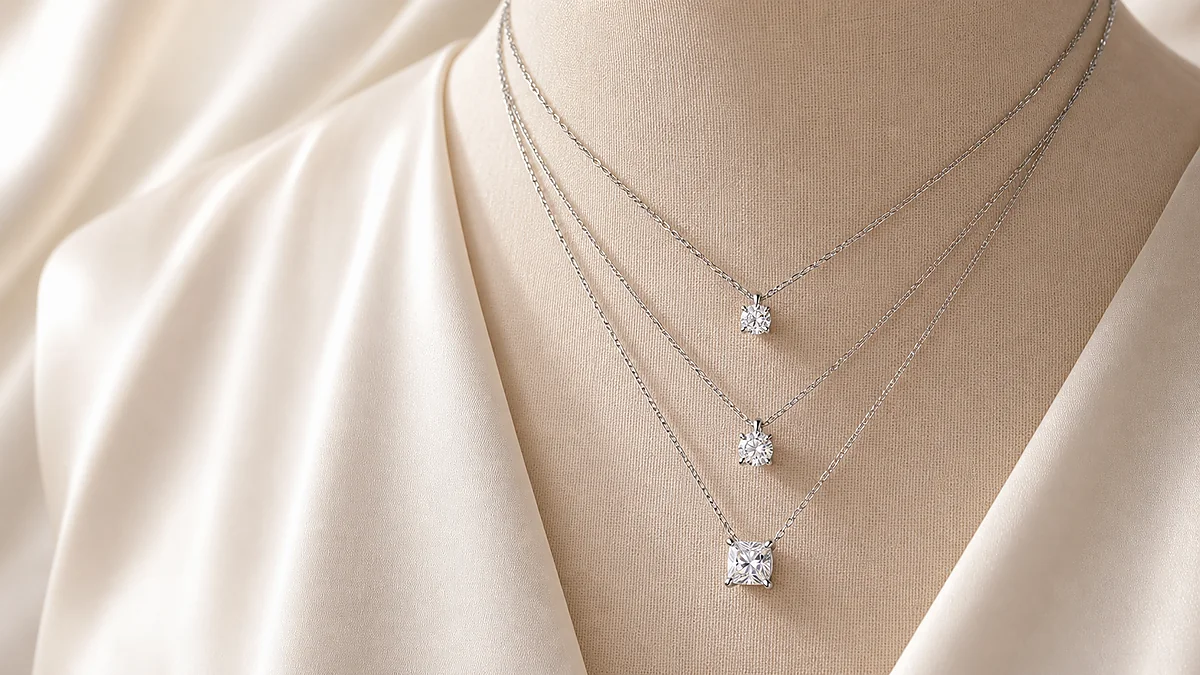
Layering works best when each necklace has a job. One chain can sit high and plain, one can carry the pendant, and one can add length. Avoid placing two pendants at the same height because they will compete visually and may tangle.
Setting Style Changes the Personality
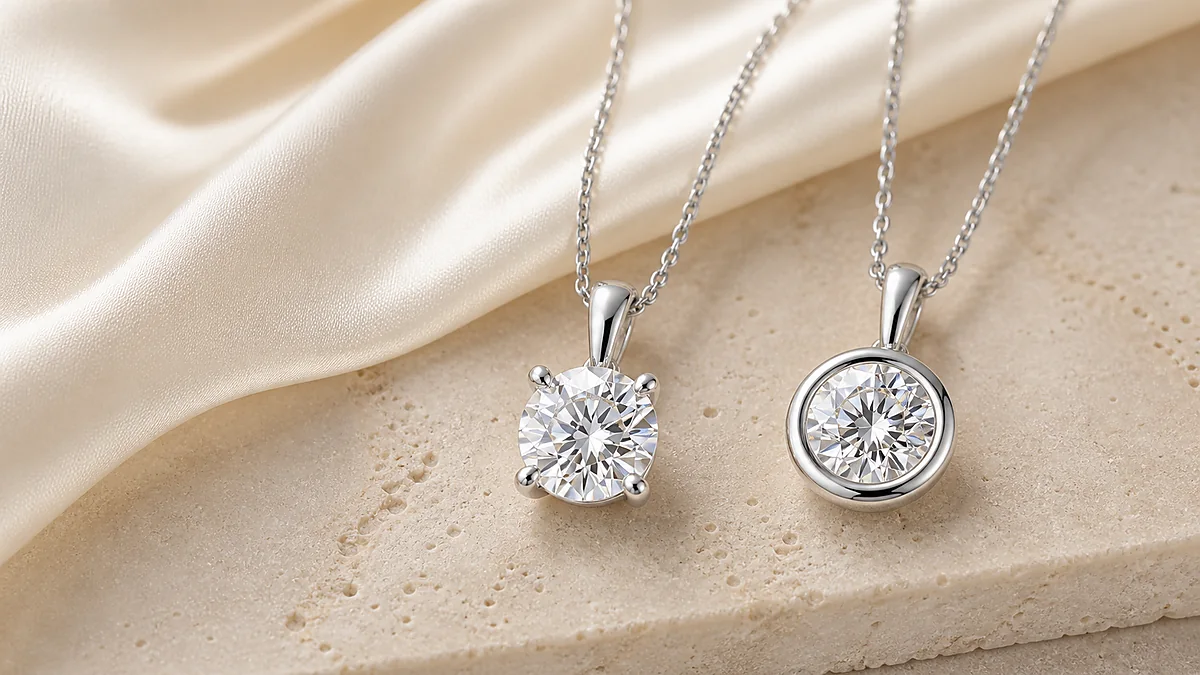
Prong settings show more of the stone and emphasize light. Bezel settings frame the stone with metal and create a cleaner outline. Halo settings enlarge the visual footprint and add extra sparkle. None is automatically best; the right setting depends on how the necklace will be worn.
Everyday Pendant Checklist
- Choose a pendant size that suits your normal outfits, not only special occasions.
- Check chain length and whether it is adjustable.
- Review the clasp size; tiny clasps can be frustrating for daily wear.
- Match metal color to jewelry you already wear often.
- Clean gently when lotion or sunscreen dulls the stone.
Final Style Advice
If you want one pendant that works almost everywhere, choose a simple moissanite solitaire or bezel pendant on an adjustable chain. If you already have everyday basics, a halo or shaped pendant can add personality. The best pendant is the one that repeatedly solves the question, “What necklace should I wear today?”
Day-to-Night Pendant Choices
If you want one pendant to work for many occasions, choose a design that can shift with clothing. A clean round solitaire feels casual with a T-shirt and more polished with a dress. A halo pendant leans dressier. A bezel pendant can look modern enough for office outfits and simple enough for weekends.
Scale is the key to versatility. A pendant that is too small may disappear in photos and layered outfits; a pendant that is too large may feel formal. Medium scale usually gives the best balance for US shoppers who want a piece they can wear often.
When to Choose a Statement Pendant
A larger or more decorative pendant makes sense when the necklace is meant to anchor an outfit. It can replace bold earrings or a dramatic bracelet. Keep nearby jewelry quieter so the pendant looks intentional rather than crowded.
Frequently Asked Questions
What pendant shape is easiest to wear?
A round solitaire is usually the easiest because it works with almost every neckline and does not feel tied to one trend. Oval and pear shapes are also versatile but create a longer visual line.
Should the pendant match my earrings?
It does not need to match exactly. Matching metal tone is usually enough. If your earrings are bold, choose a simpler pendant. If your pendant is the focal point, keep earrings smaller.
How many pendant necklaces can I layer?
Two or three is usually enough. Use different lengths and keep the largest pendant at the lowest point so the layers look intentional instead of tangled.