
Moissanite and diamond stud earrings can both deliver a bright, classic look, but they are different gemstones with different optical personalities and price structures. The better choice is not determined by which stone is “closest” to the other. It comes from deciding what you value: diamond identity, colorful fire, visible size, budget, rarity, or a particular type of brilliance.
This comparison separates those priorities so you can choose confidently and shop with accurate expectations.
Moissanite and Diamond Are Different Gemstones
Diamond is crystalline carbon. Jewelry-quality moissanite is generally lab-created silicon carbide. Moissanite should be sold and described as moissanite, not as a diamond. Although the two can look similar at a glance, an informed buyer should expect differences in light performance and appearance.
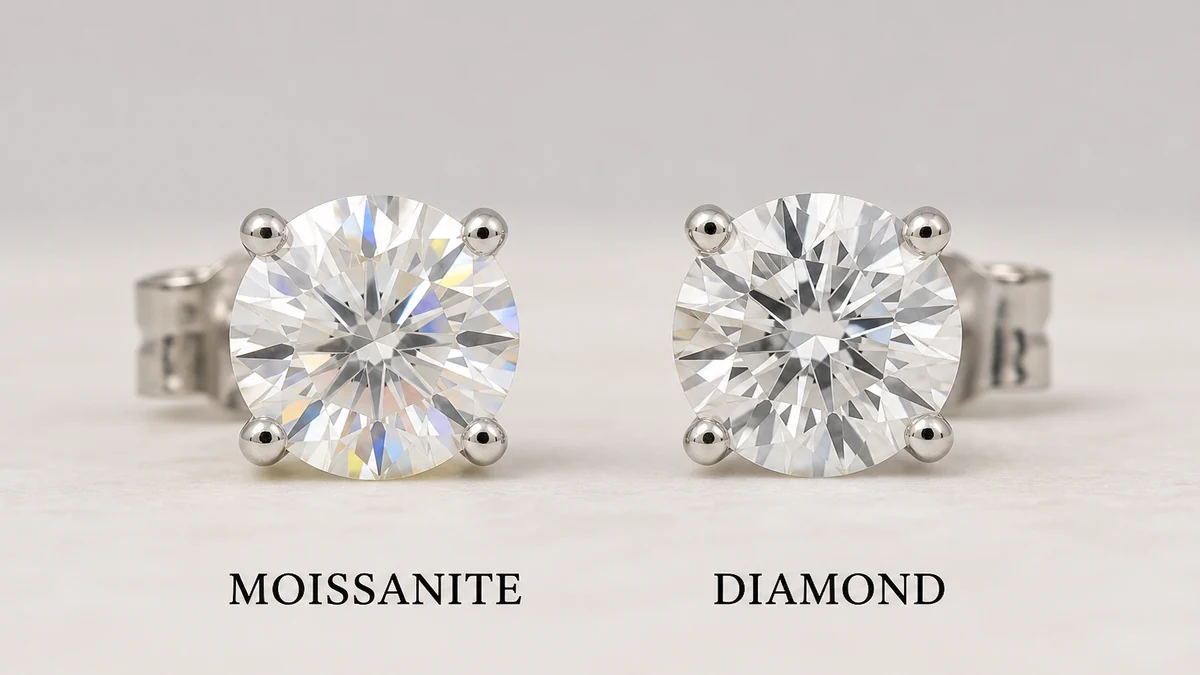
Sparkle: Brilliance and Fire
Both gems return light effectively. Moissanite is especially known for pronounced fire—the rainbow flashes seen as a stone or light source moves. Diamond often shows a balance of white brightness, fire, and contrast that many buyers recognize as a traditional diamond look.
In small studs, the difference may be subtle at conversational distance. Under spot lighting or in larger stones, moissanite’s colorful flashes can become more obvious. Some shoppers love that energetic effect; others prefer diamond’s familiar pattern. Neither preference is more correct.
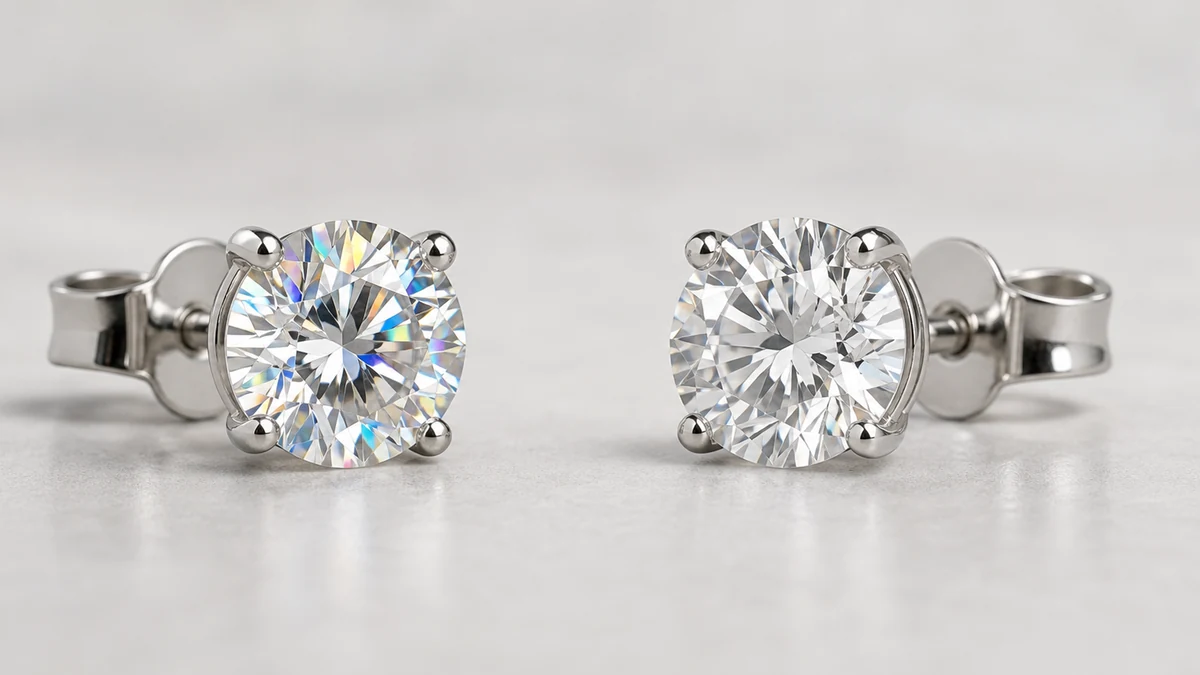
Durability for Earrings
Diamond ranks 10 on the Mohs hardness scale, while moissanite is approximately 9.25. Both resist scratching well enough for earrings worn frequently. Hardness is not the same as toughness, and no gemstone is indestructible. A sharp impact can damage a stone or, more commonly, bend the post or compromise the setting.
Because earrings usually experience less abrasion than rings, both materials are practical. Setting quality and responsible wear may matter more in daily life than the numerical hardness difference.
Price and Visible Size
Moissanite commonly allows a buyer to choose a larger face-up appearance at a lower price than a comparable natural diamond. Diamond pricing varies widely with whether it is natural or lab-grown and with cut, color, clarity, and carat weight. Moissanite pricing also varies by size and quality, but it is not graded or valued exactly like diamond.
Compare millimeter dimensions rather than relying only on carat language. Carat measures weight, and different materials have different densities. For stud earrings, face-up diameter tells you more directly how much space the stone occupies on the ear.
Color and Clarity
Moissanite can be sold in colorless or near-colorless ranges, and some stones may show warmth in certain lighting. Diamonds span formal color and clarity grades. In earrings, slight inclusions or color can be difficult to see at normal viewing distance, so premium grades may not always create an equally large visual difference.
Cut quality and matching are essential for a pair. The two studs should look consistent in diameter, apparent color, and light performance. Ask how the pair is matched and whether any grading report or warranty applies.
How They Look When Worn
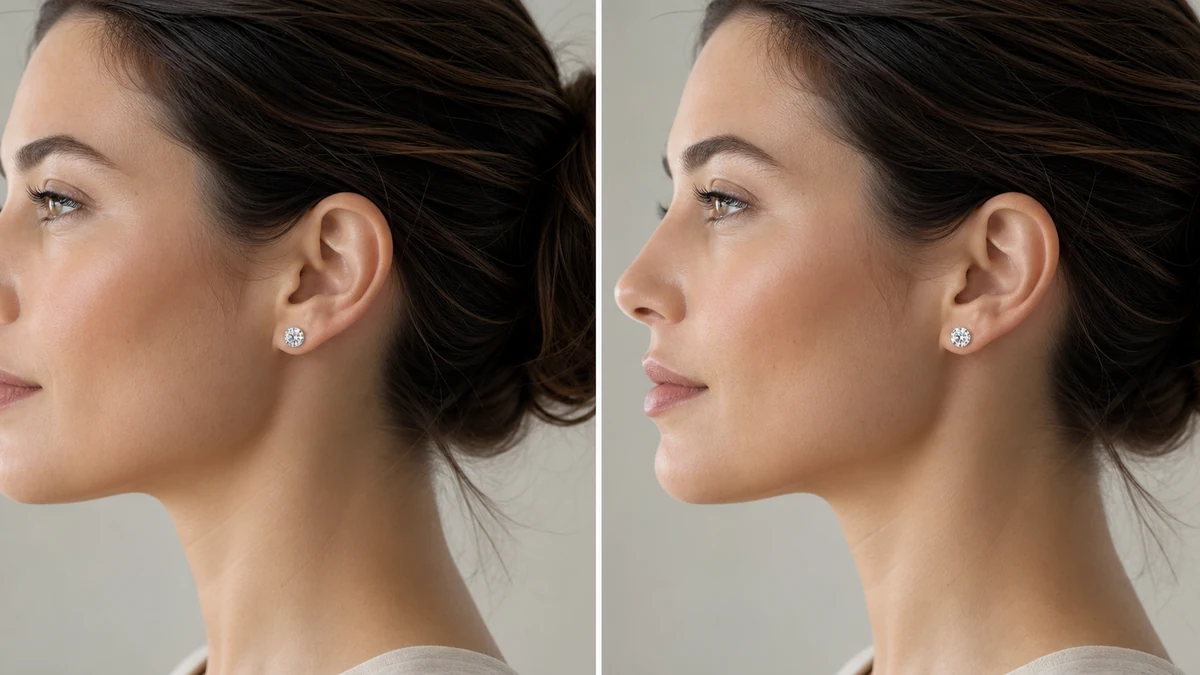
The setting changes the impression nearly as much as the stone. A four-prong basket feels open and geometric, six prongs emphasize a round outline, and a bezel creates a metal frame. White metal visually blends into a colorless stone; yellow metal introduces contrast and warmth.
Backings also affect wear. Butterfly backs are familiar, screw backs provide a threaded connection, and flat backs create a low rear profile. Compare post length, setting height, and total weight in addition to the gemstone.
Which Stud Earrings Are Better for You?
Choose moissanite if you prioritize vivid fire, a larger visual size for the budget, and a durable lab-created gemstone with its own identity. Choose diamond if the diamond name, its characteristic optical pattern, traditional symbolism, or a particular grading framework is central to the purchase.
For a gift, avoid guessing about symbolism. Some recipients specifically want diamond; others prefer moissanite because of its look and price. A transparent conversation—or a clear return policy—can matter more than technical comparisons.
Care for Either Pair
Skin oils and cosmetics reduce visible brightness on both gems. Use warm water, mild dish soap, a soft brush, and a lint-free cloth. Clean the underside of the stone, where residue collects. Rinse in a bowl rather than over an open drain, and inspect prongs and backs regularly. More advice is available in the VEZENY jewelry care guide.
Quick Comparison
- Identity: two distinct gemstones that should be labeled accurately.
- Sparkle: moissanite often displays stronger rainbow fire; diamond has a familiar balance of optical effects.
- Hardness: both are highly scratch resistant and suitable for earrings.
- Budget: moissanite usually offers more visible size for the spend.
- Buying data: diamond uses established grading factors; moissanite descriptions vary by seller.
- Best choice: the gem whose identity, look, and cost match your priorities.
Frequently Asked Questions
Can most people tell moissanite and diamond studs apart?
At normal distance, small studs can look similar. Differences in fire may become clearer under strong lighting or at larger sizes. A gem professional can identify the material.
Does moissanite get cloudy over time?
Moissanite does not normally become internally cloudy from ordinary wear, but surface oils and products can dull its appearance. Gentle cleaning restores brightness in many cases.
Are moissanite studs good for daily wear?
Yes. Moissanite is highly scratch resistant, though posts, backs, and settings still require care and inspection.
Should I buy by carat or millimeter size?
Use millimeter dimensions for visible face-up size. Carat is weight and does not translate identically across different gemstone materials.
See Moissanite Studs for Yourself
If lively fire, practical durability, and visible value fit your priorities, explore VEZENY moissanite earrings. Choose the stone honestly for what it is—not merely as a substitute for something else.