
When shopping for an engagement ring or fine jewelry, one of the most common questions is: Should I choose moissanite or diamond?
At first glance, the two gemstones look remarkably similar. Both offer exceptional beauty, durability, and brilliance, making them popular choices for rings, necklaces, and earrings. However, there are important differences in their origin, sparkle, price, and overall value.
This guide compares moissanite and diamond side by side, helping you decide which gemstone is right for your style, budget, and lifestyle.
What Is Moissanite?
Moissanite is a gemstone first discovered by French scientist Henri Moissan in a meteor crater in 1893. Natural moissanite is extremely rare, so the gemstones used in jewelry today are carefully created in laboratories.
Moissanite has become one of the most popular alternatives to diamonds because of its remarkable brilliance, durability, and affordability.
Why People Love Moissanite
- Exceptional sparkle and fire
- More affordable than diamonds
- Ethically created and conflict-free
- Suitable for everyday wear
- Available in various jewelry styles and sizes
What Is a Diamond?
Diamonds are gemstones composed of pure carbon that form naturally beneath the Earth’s surface over billions of years. They have long been associated with luxury, tradition, and engagement jewelry.
Today, diamonds are available as both natural and lab-grown stones.
Why People Love Diamonds
- Traditional prestige and symbolism
- Outstanding durability
- Timeless appeal
- Strong historical and cultural significance
Moissanite vs Diamond: Side-by-Side Comparison
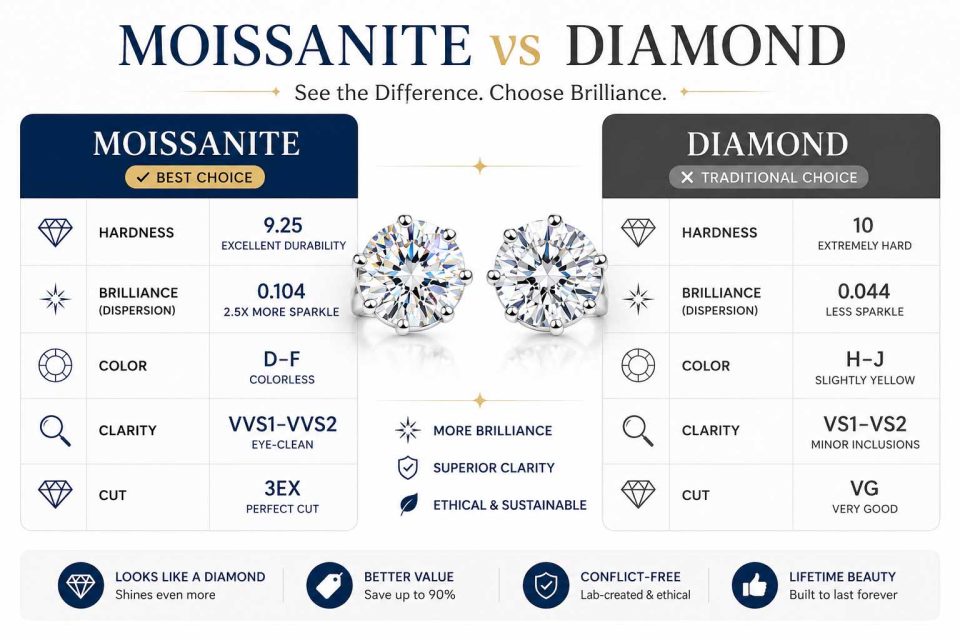
| Feature | Moissanite | Diamond |
|---|---|---|
| Composition | Silicon Carbide | Carbon |
| Origin | Lab-Created | Natural or Lab-Grown |
| Hardness | 9.25 Mohs | 10 Mohs |
| Brilliance | Very High | High |
| Fire (Rainbow Sparkle) | More Intense | More Subtle |
| Price | Significantly Lower | Higher |
| Ethical Impact | Conflict-Free | Depends on Source |
| Everyday Durability | Excellent | Excellent |
Which Sparkles More?
One of the biggest differences between moissanite and diamond is their sparkle.
Moissanite has a higher refractive index than diamond, meaning it bends light more efficiently and produces more colorful flashes of light, often called fire.
Moissanite Sparkle
- More brilliance
- More rainbow flashes
- Eye-catching and vibrant appearance
Diamond Sparkle
- Softer white brilliance
- Traditional and elegant look
- More subtle flashes of color
Neither is objectively better—the choice comes down to personal preference.
Durability: Can You Wear Them Every Day?
Yes. Both gemstones are suitable for everyday wear.
Diamond
- Mohs Hardness: 10
- The hardest natural material on Earth.
Moissanite
- Mohs Hardness: 9.25
- Extremely resistant to scratching and daily wear.
For practical purposes, both gemstones are excellent choices for engagement rings and everyday jewelry.
Price Comparison
Price is one of the biggest reasons shoppers choose moissanite.
A moissanite gemstone can cost a fraction of the price of a comparable diamond while offering a very similar appearance.
For the same budget, you may be able to choose:
- A larger stone
- More impressive visual impact
- Higher overall value
This is why moissanite has become increasingly popular among modern jewelry buyers.
Ethical and Environmental Considerations
Many shoppers today prefer jewelry that is ethically sourced and environmentally responsible.
Moissanite
- Lab-created
- Conflict-free
- No mining required
- Lower environmental impact
Diamond
- Natural diamonds require mining
- Lab-grown diamonds offer a more sustainable alternative
For buyers who prioritize sustainability, moissanite is often an attractive choice.
Appearance: Can People Tell the Difference?
In everyday situations, most people cannot distinguish a high-quality moissanite from a diamond without specialized equipment.
The main visual difference is that moissanite tends to produce more colorful flashes of light, while diamonds display a softer white sparkle.
To most people, both gemstones appear beautiful and luxurious.
Which Is Better for an Engagement Ring?
There is no universal answer because the best choice depends on your priorities.
Choose Moissanite If You Want:
- Exceptional sparkle
- A larger stone for your budget
- Excellent value
- Ethical and sustainable jewelry
- Modern luxury and practicality
Choose Diamond If You Want:
- Traditional prestige
- Natural rarity
- Historical symbolism
- Conventional luxury appeal
Both gemstones make beautiful engagement rings and fine jewelry pieces.
Frequently Asked Questions
Does moissanite look like a diamond?
Yes. Moissanite closely resembles a diamond and is often difficult to distinguish from one during everyday wear.
Is moissanite a fake diamond?
No. Moissanite is a genuine gemstone with its own unique properties and composition.
Which sparkles more, moissanite or diamond?
Moissanite generally produces more fire and brilliance than a diamond.
Does moissanite last forever?
Moissanite is highly durable and suitable for lifelong wear when properly cared for.
Is moissanite worth buying?
Many customers consider moissanite an excellent value because it offers remarkable beauty, durability, and sparkle at a significantly lower price than diamonds.
Final Thoughts
Both moissanite and diamonds are beautiful gemstones that can last a lifetime. Diamonds offer tradition and prestige, while moissanite provides exceptional brilliance, outstanding value, and an ethical alternative.
Ultimately, the right choice depends on your personal preferences, lifestyle, and budget.
If you’re looking for a gemstone that delivers incredible sparkle and luxury without the premium price tag, moissanite may be the perfect choice.