
For an intact amethyst piece with a compatible metal setting, lukewarm water, a little mild soap and a very soft brush are a sensible starting point. First check the complete piece: glue, coatings, mixed materials, damage or special seller instructions can change what is appropriate.
GIA recommends warm soapy water for amethyst and advises against steam; its amethyst care guide also notes considerations involving treatments and durability. The routine below is for gentle cleaning of suitable jewelry, not a way to identify the stone or repair damage.
Before adding water
- Look for a lifted prong, a missing accent or a stone that moves. If you notice one, put the piece aside for a jeweler.
- Check whether the jewelry also contains shell, enamel, another gemstone or glued components.
- Confirm whether the metal is plated. An abrasive polishing product that suits bare silver may be unsuitable for the finish.
- Set up a small bowl away from an open sink drain, with a clean soft towel beside it.
A careful wash, from start to finish
1. Prepare a mild solution
Add a small amount of plain mild soap to lukewarm water. Avoid abrasive pastes, toothpaste, household bleach and improvised acidic mixtures. Do not add extra products in the hope of making a stubborn mark disappear faster.
2. Clean with light contact
Support the piece and gently work around the stone and accessible parts of the setting with a very soft brush. Keep pressure off prong tips. You are trying to lift surface residue, not scrub the stone or push tools into the setting.
For a delicate chain, work on a supported section instead of pulling the necklace through a cloth. If the construction or finish has not been confirmed as suitable for washing, use the maker’s instructions or ask a jeweler before proceeding.
3. Rinse and dry completely
Use a separate bowl of clean water at a similar temperature. Pat dry with a soft lint-free cloth and allow remaining moisture around the setting to dry before storage. Avoid a hot hair dryer or direct heat.
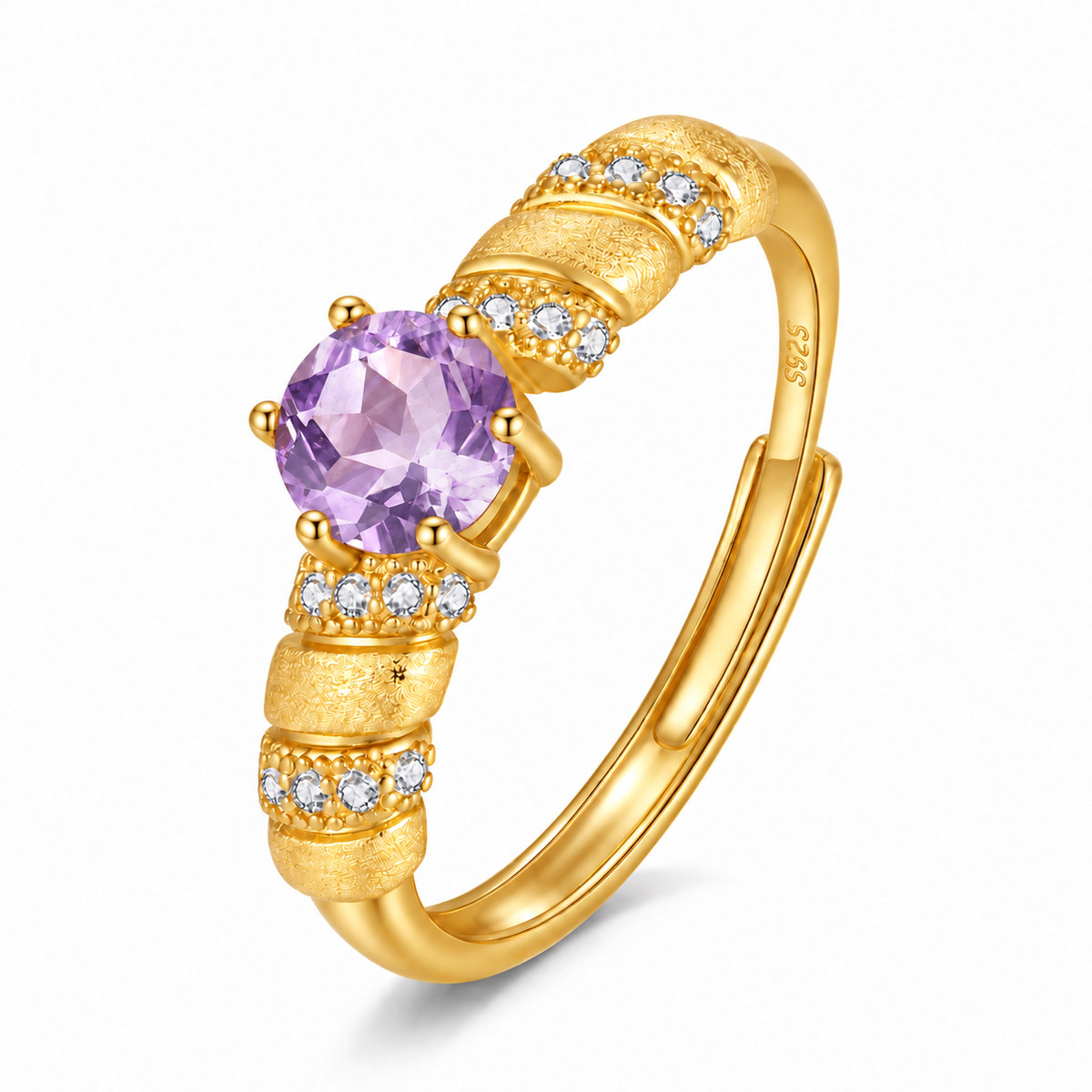
The brushed segment gemstone ring illustrates why a gemstone-only cleaning rule is incomplete. Its listing offers Amethyst and two finish tones. The pictured gold-tone option should not be treated as bare silver to polish aggressively, and an open band should not be squeezed or spread while cleaning.
Can amethyst go in water?
Brief washing of suitable amethyst jewelry is different from wearing it in the shower, leaving it in a bath or soaking it overnight. Those situations add other materials, products and exposure conditions. A general answer about quartz does not establish water resistance for a finished ring or necklace.
If it still looks dull
Check whether you are seeing residue behind the center, tarnish on metal or a change in the surface finish. If one gentle clean does not resolve it, stop experimenting. A jeweler can distinguish a cleaning problem from wear, a coating issue or damage without escalating to harsher chemicals at home.
For ongoing storage and metal care, see our sterling silver gemstone jewelry care guide. Store the dry piece separately and inspect it before the next wash, rather than treating every cleaning session as an automatic repeat.