
London Blue and Swiss Blue are trade color descriptions used for blue topaz. In shopping language, London Blue generally suggests a deeper blue, while Swiss Blue suggests a brighter, more vivid blue. Treat those names as a description to investigate, rather than a precise color standard shared by every seller.
The useful question is not which name sounds more valuable. It is whether the particular stone remains the blue you want in the lighting where you will wear it.
What a color name does not establish
A London Blue label does not establish that the stone was mined in London. A Swiss Blue label does not establish Swiss origin. Neither name, by itself, tells you the treatment history, the quality of the cut or the dimensions of the finished jewelry.
GIA explains that much blue topaz gets its color through treatment in its topaz description. Ask for the seller’s disclosure rather than assuming that a naturally occurring mineral must have an untreated color.
Compare the two looks with the same viewing conditions
- Use one screen. Two devices can make one blue look cooler or brighter than another.
- Ask for the same light. A daylight image of one stone and a spotlight image of another are a weak basis for comparison.
- Look face-up and slightly tilted. A single highlight can conceal how dark a large area looks when the piece moves.
- Keep size in view. Compare the stone dimensions, not just the image dimensions.
For earrings, ask to see both pieces together. For a pendant, ask for a view against clothing as well as the white studio background. Neither request requires you to become a gemologist; it simply makes the comparison more relevant to wearing the jewelry.
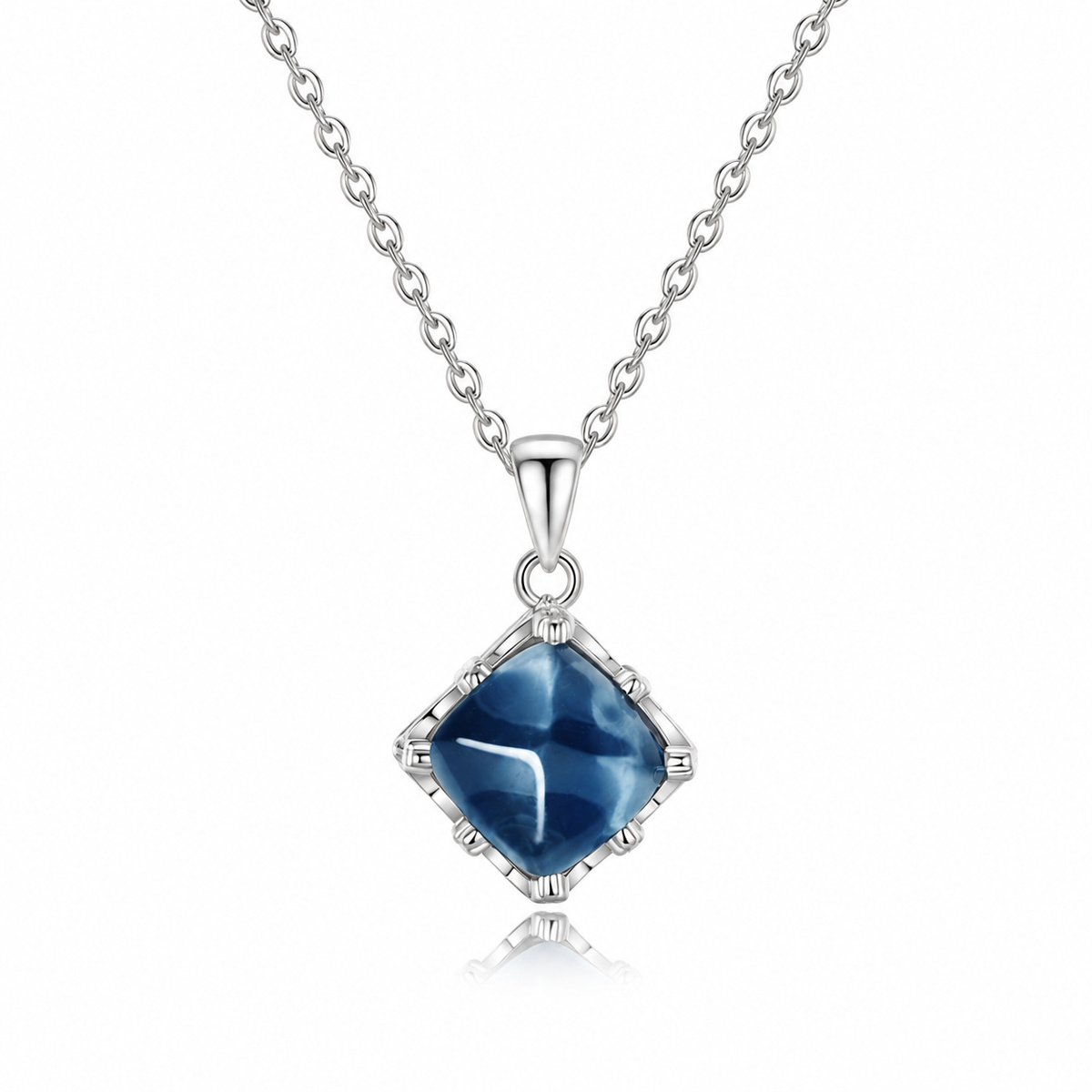
Two Vezeny listings illustrate why the exact wording matters
The London Blue Topaz sugarloaf listing explicitly uses London Blue in its name and lets you choose a necklace, ring or earrings. The product title’s word “set” does not mean every piece is included. Select the item you want and confirm its own measurements; the shared description contains pendant specifications.
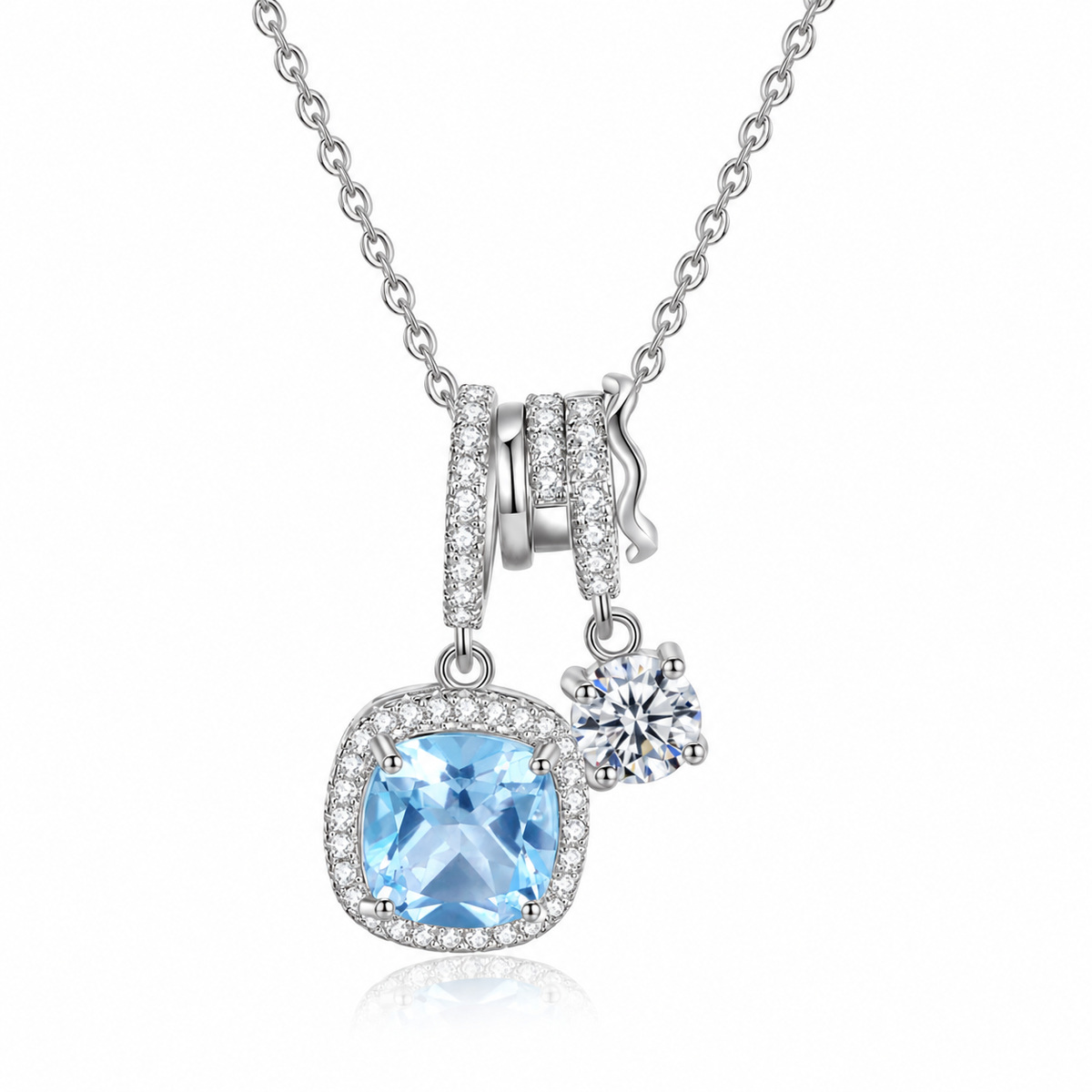
The cushion-cut Blue Topaz pendant offers a different appearance: a light-blue center, a clear halo and a separate round charm. Its listing gives an 8 mm gemstone and a 23 × 11 mm pendant. Because the page does not name it Swiss Blue, the lighter image should not be used as proof of that designation.
Is the darker option always the better choice?
No. If you enjoy a strong blue accent against light shirts, compare how the deeper option looks at ordinary distance. If you want an airy color beside pale fabrics, compare a lighter blue. These are styling preferences, not a universal quality ranking.
A matching ring and necklace should also be compared together. The same color name across separate listings does not promise an exact visual match. Ask about the selected pieces rather than relying on the labels alone.
Once the color is settled, use our gemstone pendant sizing guide to check placement. Keep the written material description, treatment information and item selection with your order confirmation, so the piece you receive can be checked against what you chose.