
No. “Natural” describes a gemstone’s geological origin; it does not establish that the stone has never been treated. A natural gemstone may have undergone a process to alter its color or appearance. Treatment history and natural origin are separate questions.
When choosing colored gemstone jewelry, read the stone identification, treatment information, metal description and care instructions together. One attractive photograph cannot answer all four.
Three labels that answer different questions
- Natural: the gemstone formed in nature.
- Treated: a process has changed an aspect of the gemstone after formation.
- Laboratory-grown: the material was produced in a laboratory rather than through geological formation.
A laboratory-grown counterpart is also different from an imitation made from another material. Ask for the actual gemstone identity rather than relying only on a color description such as “ruby red” or “emerald green.”
Citrine is a useful example
GIA explains that much of the citrine on the market results from heating amethyst. That is general information about the market, not proof of how any particular VEZENY stone was processed. Read GIA’s citrine quality factors for the underlying distinction.
If treatment status affects your decision, ask the seller what is known about the exact item. A statement about common practice should not be presented as an item-specific laboratory result.
A color name does not establish treatment history
Two stones with similar colors may have different origins or treatment histories. Conversely, natural variation can occur within one gemstone variety. Lighting and screen settings also affect the color you see online, so a photo is not a diagnostic test.
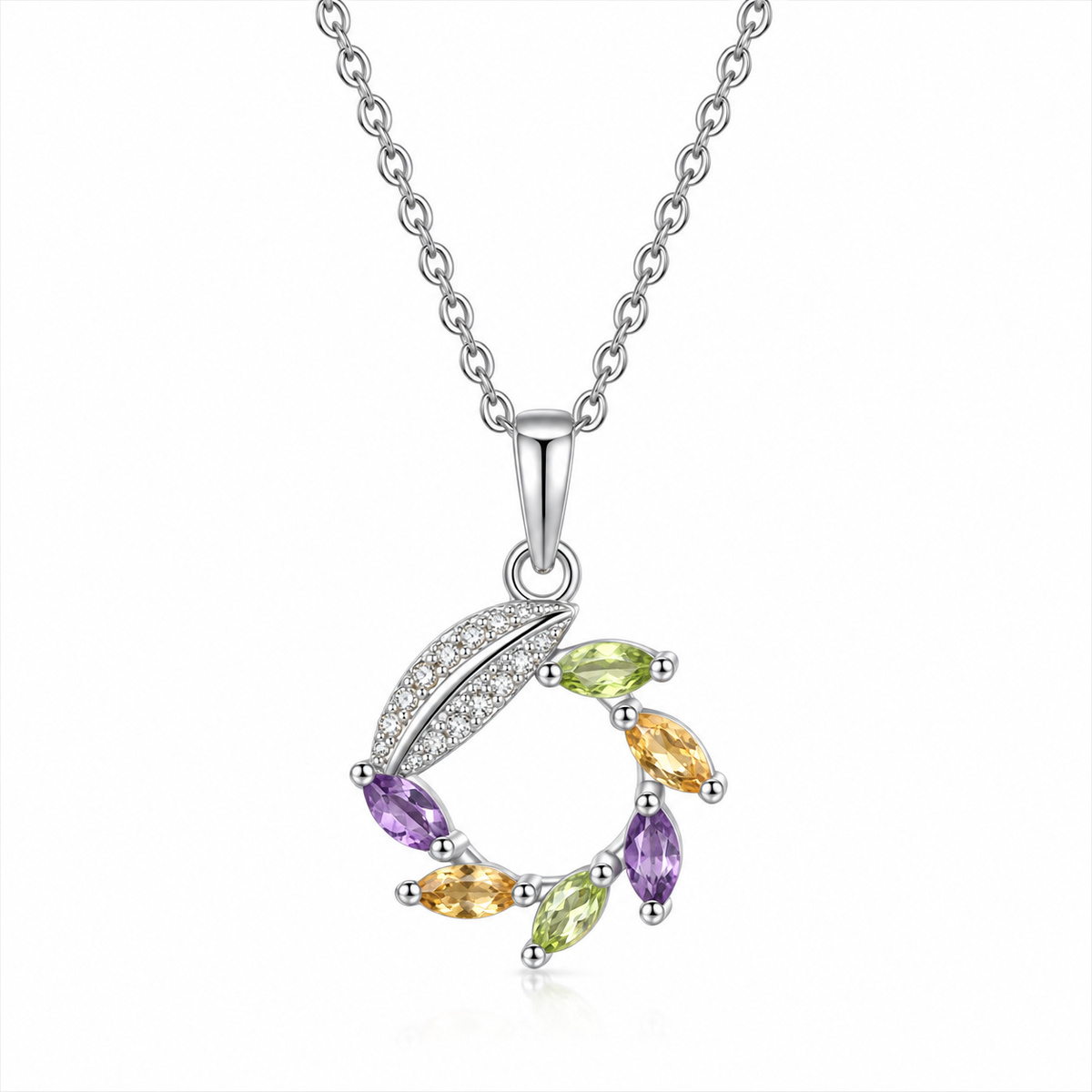
The leaf wreath multicolor pendant illustrates another reading task: identify each gemstone in the finished piece. A mixed-gem design should not be understood as a single-stone product with interchangeable colors unless the listing says so.
What should you ask before buying?
- What gemstone is present in each part of the design?
- Is its origin natural or laboratory-grown?
- What treatments are known or disclosed?
- Does that information change cleaning or wear instructions?
- Is an identification report included, and what does it actually cover?
Not every affordable jewelry item comes with an independent report. If one is offered, check the issuing organization, report details and whether the document describes a loose stone or the finished item. Do not assume a report establishes claims that are outside its scope.
Treatment and quality are not the same question
A treatment disclosure helps you understand what you are purchasing. Your choice can also consider appearance, price, construction and care requirements. An untreated claim alone does not establish attractive cutting, secure settings or a good fit for your routine.
For cleaning decisions, use the guidance for the complete piece, including metal, plating and every gemstone. Our gemstone jewelry care guide explains why a silver cleaner is not automatically suitable for a mounted gemstone.