An ultrasonic cleaner is not suitable for every gemstone or every finished piece of jewelry. Before using one, identify all stones and materials, check for known treatments and inspect the settings. When those details are unknown, do not experiment with the machine.
A cleaner that works for one plain metal item may be inappropriate for a pendant with several gemstones, plating, adhesives or delicate components.
Why gemstone identity matters
Different gemstones have different care requirements. GIA advises against ultrasonic cleaning for peridot, while its amethyst guidance distinguishes normally suitable material from exceptions such as fracture-filled or dyed stones. These are not interchangeable instructions.
Read the specific GIA peridot guide and amethyst care guide before applying advice about one gemstone to another.
Mixed-gem jewelry needs a complete assessment
Check accent stones, surface finish and construction as well. An image of a pendant cannot tell you whether every component is appropriate for a particular cleaning method.
A sound setting is another requirement
Inspect for a loose stone, distorted prong or damaged connection before any cleaning. If something moves or appears damaged, stop wearing the item and have it inspected. A cleaning machine cannot restore the strength of a worn or bent setting.
Do not rely on gemstone hardness alone. Resistance to scratching does not answer questions about fractures, treatments, plating or the condition of the finished piece.
What if treatment history is unknown?
Ask the seller or a jeweler. The description “natural” does not establish untreated status, and a lack of visible damage is not proof that a machine is suitable. Avoid choosing settings or chemicals by trial and error.
When hand cleaning is permitted by the item’s instructions, use the recommended mild method and work over a bowl rather than an open drain. Dry the piece fully before storage. For amethyst and citrine, GIA describes warm soapy water as suitable; that guidance still needs to be considered alongside the other materials in a finished item.
A decision checklist
- All gemstones and other materials are identified.
- Relevant treatment and care information is available.
- The seller or jeweler confirms ultrasonic cleaning is suitable for the complete item.
- The piece has no loose or damaged components.
If any answer is unclear, choose professional advice rather than assuming a longer or gentler machine cycle resolves the risk. For routine care, see our sterling silver gemstone jewelry guide.
Two examples where the selected gemstones change cleaning decisions
These recommendations are for comparing designs and care information. They are not endorsements for ultrasonic cleaning.
Fixed multicolor flower pendant
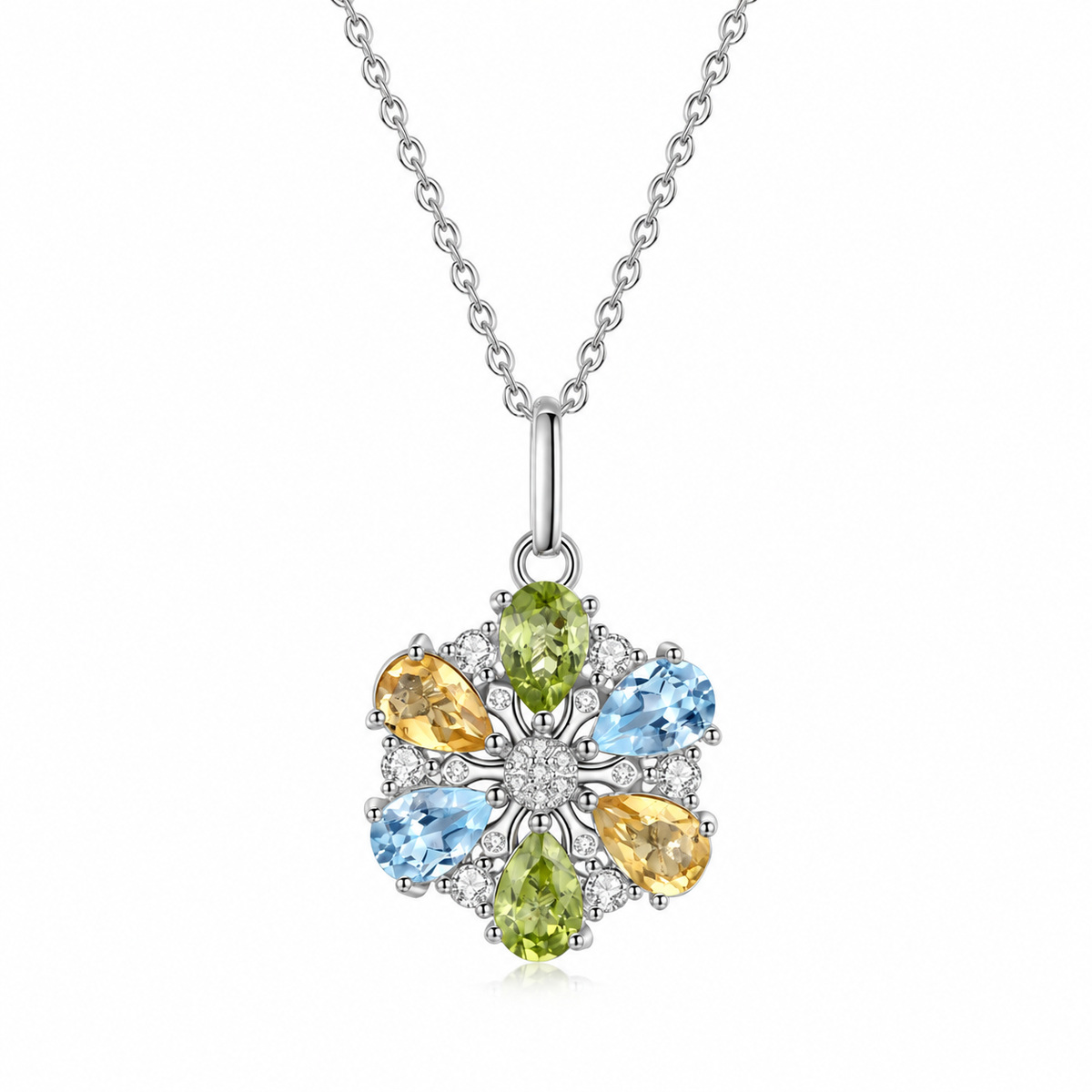
The listing identifies Peridot, Citrine and Blue Topaz in one fixed design, with a 17 × 25 mm overall pendant. Peridot’s cleaning restrictions are relevant to the whole piece. Do not treat the blue stones as permission to clean the pendant using a method chosen for another material.
Marquise leaf-branch studs
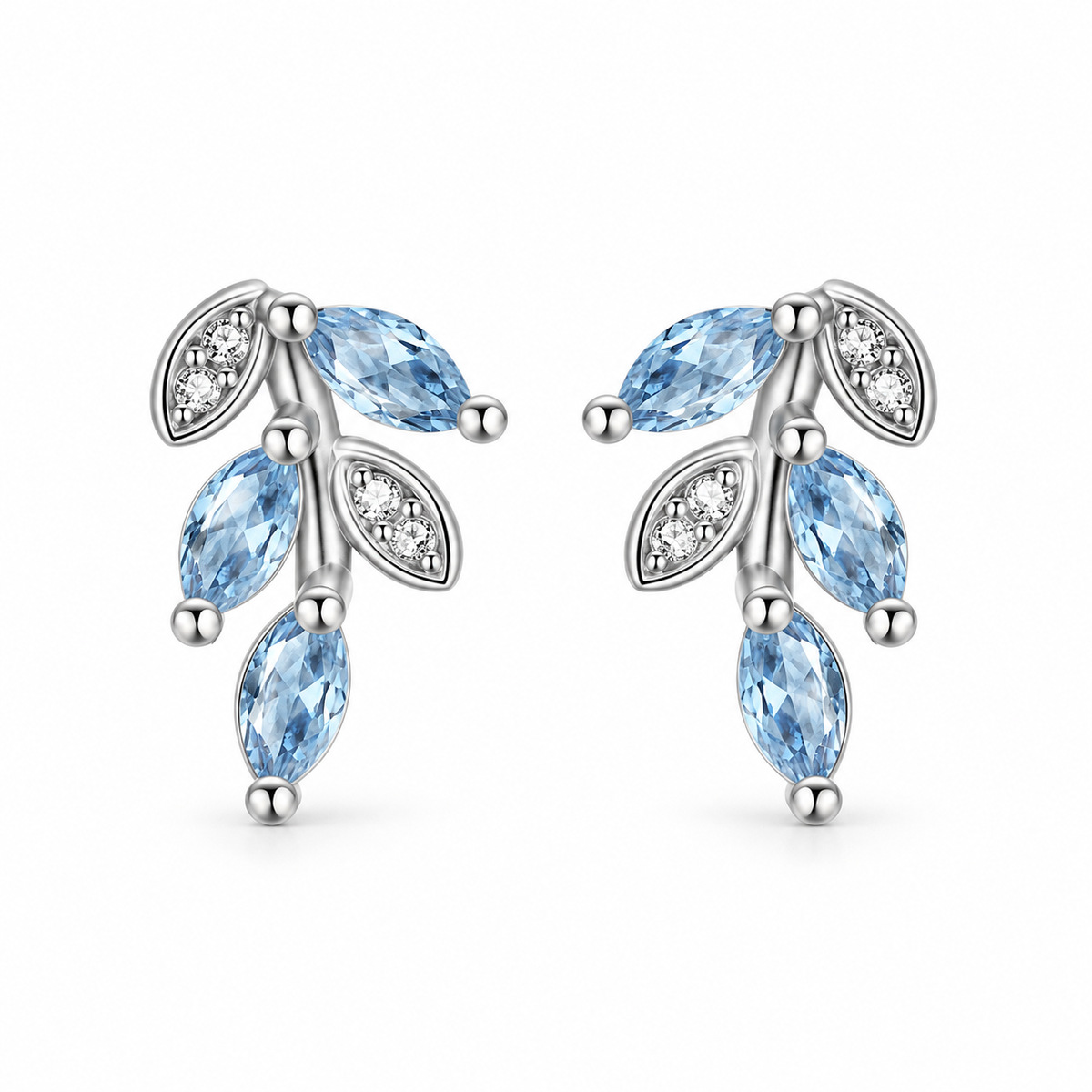
The listing offers Amethyst, Blue Topaz, Citrine, Garnet and Peridot options. The pictured blue pair does not establish the care needs of the Peridot variation. Confirm the selected gemstone and the plated setting’s instructions before choosing a method.