
Clean suitable blue topaz jewelry gently with lukewarm water and mild soap, after checking the condition and materials of the complete piece. Skip steam and ultrasonic cleaning for topaz. A higher hardness number does not make those methods appropriate.
GIA’s topaz care guide recommends warm soapy water and explains why heat, sudden temperature changes and impacts need care. If a stone is loose, chipped or of uncertain treatment, ask a jeweler before attempting a home clean.
Put these on the table first
- A small bowl of lukewarm water with a little plain mild soap.
- A second bowl for rinsing at a similar temperature.
- A very soft brush, used only where the construction allows.
- A soft lint-free cloth and a secure drying surface away from a drain.
Inspect the chain, ear posts, hinges and prongs before washing. Do not use cleaning as an opportunity to force a stiff clasp or bend a raised prong. Photograph anything that looks unusual and seek advice instead.
Wash lightly, then rinse and dry
Support the jewelry while gently removing accessible residue. Brush with light contact around the setting; do not press through openings or lever against the gemstone. For fine chains, support one section at a time rather than pulling the entire chain through a cloth.
Rinse in the second bowl, pat dry and allow moisture around the setting to dry fully before storage. A hot hair dryer is unnecessary. If the metal is plated, avoid abrasive cloths or compounds unless the maker specifically recommends them for that finish.
One blue stone can sit in a much more complicated piece
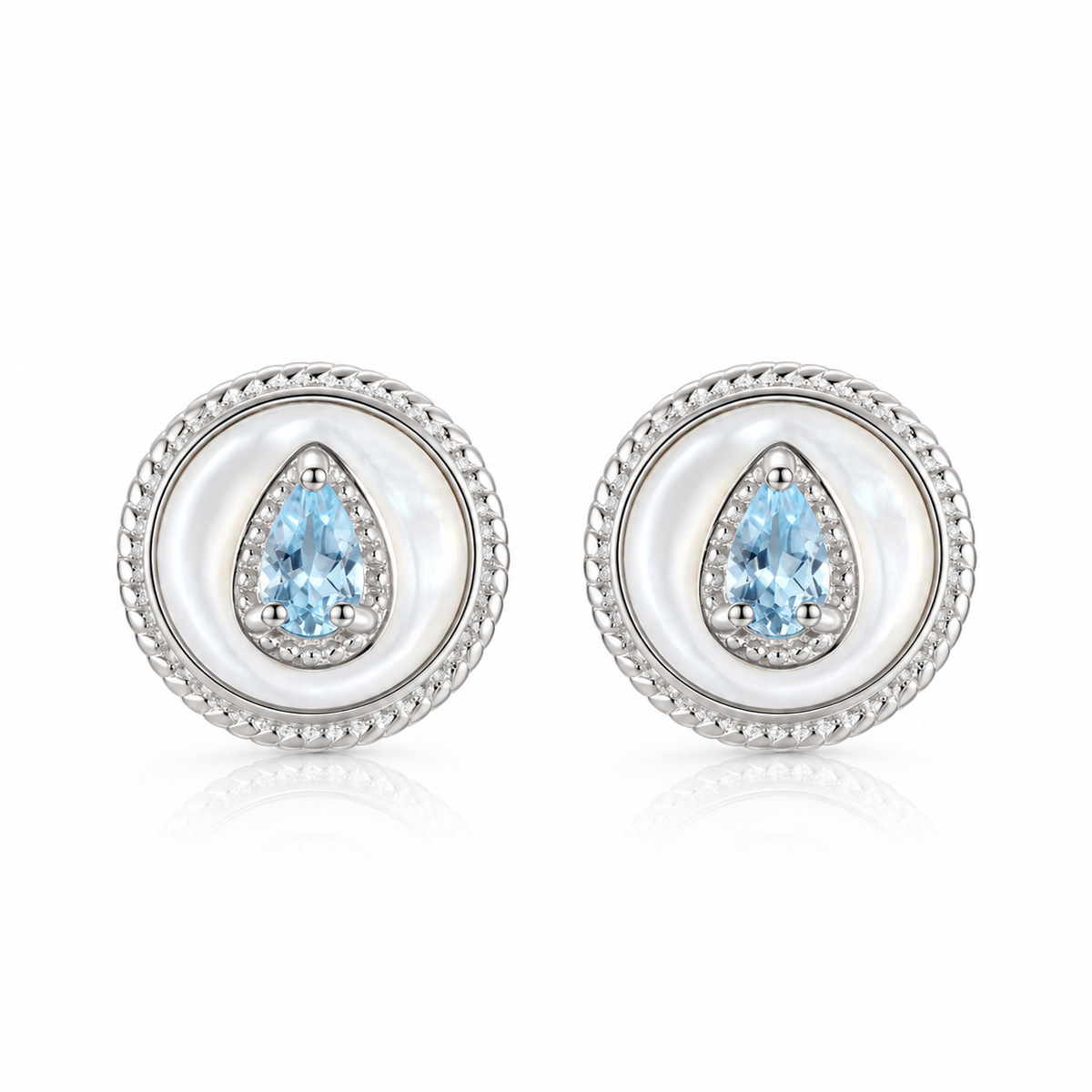
The mother-of-pearl gemstone studs combine a gemstone, shell inlay, metal and clear accents. A topaz cleaning rule alone cannot approve prolonged immersion for the complete earring. For a mixed-material design like this, confirm the construction and follow care suitable for every component; a gently dampened cloth may be the appropriate interim option while you obtain instructions.
By contrast, the cushion-cut Blue Topaz pendant has a halo and a separate round charm. Even without shell, its small connections and settings need a light touch. More vigorous brushing is not a substitute for reaching every crevice safely.
Methods to leave out
| Method | Why leave it out of a home routine? |
|---|---|
| Steam or ultrasound | Topaz has care limitations that make these unsuitable. |
| Toothpaste or abrasive powder | They add abrasion to a job that usually needs gentle residue removal. |
| Boiling water followed by a cold rinse | Avoid sudden temperature changes. |
| Silver dips and household chemical mixtures | Their compatibility with the gemstone, finish and other materials is not established. |
If the marks remain
Stop after a gentle clean if you still see a dull patch, a line that might be a crack or a change in the finish. Describe when you first noticed it and which products the piece has contacted. A jeweler can examine whether the issue is residue, a surface treatment, metal wear or damage.
Do not assume every iridescent effect means that the stone is ordinary blue topaz with dirt on it. Coated topaz requires its own disclosure and care. If the selected stone or treatment is unclear, that uncertainty should be resolved before using another method.
Between cleans, store the dry jewelry separately from other pieces and remove it before strenuous activities or household chemicals. Our silver gemstone care guide covers the metal side of that routine.